

Guide to Choosing Overhead Cranes
Jul 23,2024
Guide to Choosing Overhead Cranes
Overhead cranes are widely used in industrial production for lifting and transporting heavy loads. Choosing the right overhead crane can not only improve work efficiency but also ensure operational safety and cost-effectiveness. This article will briefly introduce several common types of overhead cranes and focus on how to choose the most suitable equipment based on actual needs.
Types of Overhead Cranes
Single Girder Overhead Crane
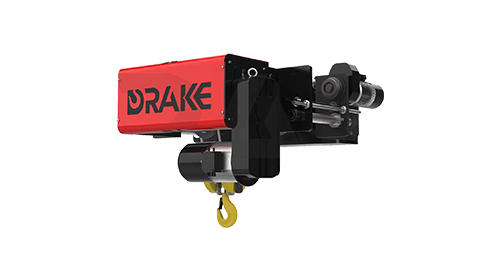
Introduction: Single girder overhead cranes consist of a single main beam and an electric hoist, featuring a simple structure and lower cost.
Applicable Scenarios: Suitable for light and medium loads, commonly used in workshops, warehouses, and other places.
Advantages: Easy to install and maintain, flexible operation, suitable for environments with smaller spans.
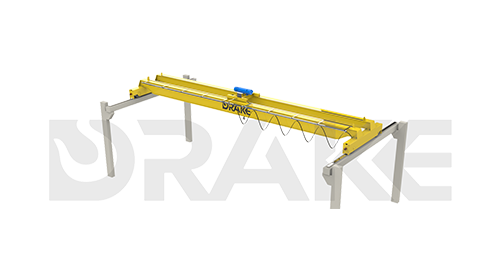
Double Girder Overhead Crane
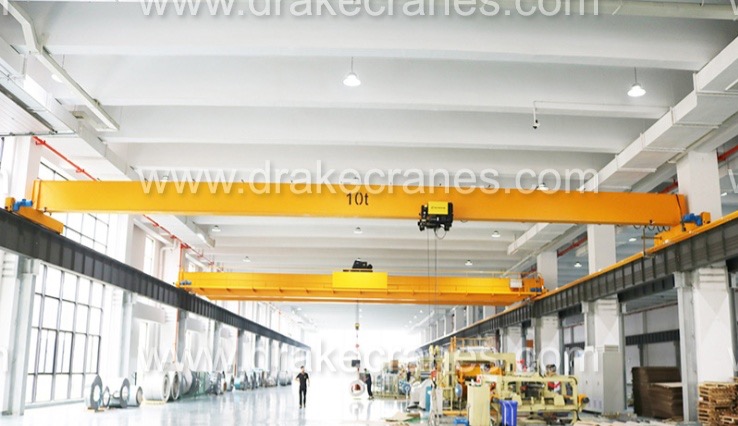
Introduction: Double girder overhead cranes consist of two main beams and a hoist trolley, offering strong load capacity and stable structure.
Applicable Scenarios: Suitable for heavy and super heavy loads, commonly used in steel mills, shipyards, and other heavy industries.
Advantages: High load capacity, suitable for larger spans and high-frequency operations, stable running.

Suspension Overhead Crane
Introduction: Suspension overhead cranes hang from I-beam tracks, suitable for places with limited space or where ground tracks are unsuitable.
Applicable Scenarios: Suitable for light and medium loads, commonly used in assembly lines, warehouses, and other places.
Advantages: Does not occupy ground space, flexible installation, suitable for material handling in narrow spaces.

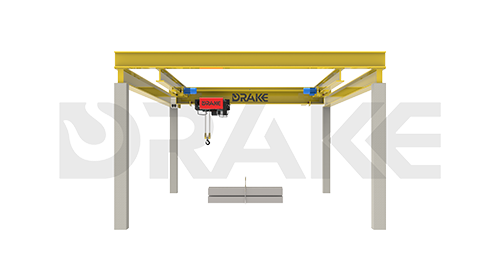
Workstation Overhead Crane
Introduction: Workstation overhead cranes are modularly designed lifting equipment, typically used for precise handling of light loads.
Applicable Scenarios: Suitable for assembly lines, manufacturing workshops, and other places requiring high-precision handling.
Advantages: Easy to operate, precise positioning, suitable for frequent material handling and assembly tasks.
Choosing the right overhead crane requires comprehensive consideration of various factors to ensure it meets work requirements and guarantees safety and cost-effectiveness. Here are the main factors to consider when selecting an overhead crane:

Load Capacity
Maximum Load: Determine the maximum load capacity required to ensure safe lifting and moving of all loads to be handled.
Duty Cycle: Choose the appropriate duty cycle based on the frequency and intensity of crane use.
Span
Span Size: Choose the appropriate span size based on the width of the workshop or work site to ensure the crane can cover all areas that need to be operated.
Lifting Height
Maximum Lifting Height: Determine the required lifting height to ensure the crane can reach all positions that need lifting and placing.
Work Environment
Environmental Conditions: Consider temperature, humidity, dust, and corrosion in the work environment, and choose the appropriate crane type (e.g., explosion-proof, dust-proof, corrosion-resistant).
Usage Location: Choose the appropriate crane design for indoor or outdoor use.
Operating Speed
Lifting Speed: Choose the appropriate lifting speed based on work efficiency requirements.
Trolley Speed: Choose the appropriate trolley speed to improve material handling efficiency.
Crane Speed: Choose the appropriate crane speed to ensure overall operational efficiency.
Control Method
Manual Control: Suitable for simple, low-frequency operations.
Remote Control: Suitable for scenarios requiring remote operation, improving safety and convenience.
Safety
Safety Devices: Ensure the crane is equipped with necessary safety devices such as overload protection, limit switches, and emergency stop buttons.
Operator Training: Ensure operators receive professional training and are familiar with crane operation procedures and safety precautions.
Budget
Cost-effectiveness: Choose the most cost-effective crane that meets all technical and safety requirements.
Long-term Investment: Consider the crane's service life and maintenance costs and choose durable equipment with low maintenance expenses.
By comprehensively considering the above factors, you can choose the most suitable overhead crane for specific work needs, improve work efficiency, ensure safety, and achieve maximum economic benefits. Whether it is a single girder overhead crane, double girder overhead crane, suspension overhead crane, or workstation overhead crane, understanding their characteristics and applicable scenarios is the key to making an informed choice.
Related information
Blog
Company News
Analysis of the Terminology and Types of Seven Categories of Overhead Cranes Based on GB/T 6974.5-2023
Sep 03,2026
Company News
Hoist: Elevating Everyday Applications in Modern Life
Dec 16,2025
Company News
Hoist Your Spirits: The Latest Buzz in News and Insights
Dec 09,2025

Drake( Henan) Intelligent Equipment Co., Ltd. Is a modern enterprise with independent import and export management rights integrating crane R&D, design, production, installation and service.
Inquire Now >
SAF Coolest v1.3.1.2 设置面板 RNJSD-ZZZW-MXSQE-ZDE
无数据提示
Sorry, the current column is being updated, so stay tuned!
You can view other columns or return to the Homepage